
Why your family lawyer isn’t telling you everything about the judge
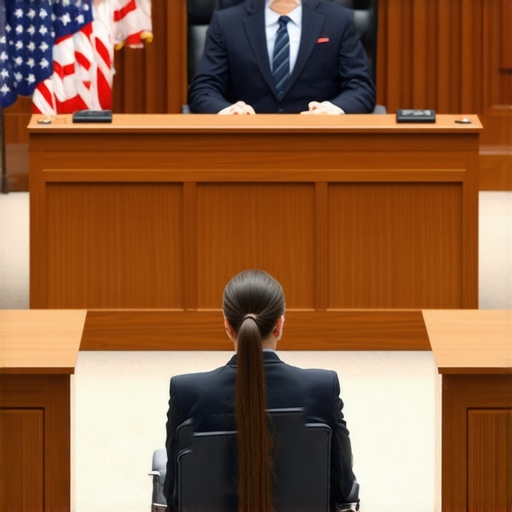
The office smells like strong black coffee and old paper. You sit across from me, hands shaking, hoping for a miracle. I am not here to give you one. I am here to tell you that your case is already on life support because you think the law is about what is fair. It is not. I once watched a client lose their entire claim in the first ten minutes of a deposition because they ignored one simple rule about silence. They felt the need to fill the quiet. They offered up a detail about a weekend trip that contradicted a minor point in their affidavit. The defense attorney did not even smile; he just moved the needle and bled them dry over the next six months. You are walking into a courtroom where the person in the black robe has already decided how much they dislike your lead counsel or how little they care for your specific brand of grievance. This is the reality of the legal machine. It is cold. It is clinical. It is expensive.
The unwritten rules of the black robe
Judges possess individual procedural preferences that legal services often ignore during a consultation. In litigation, the family law practitioner knows the judicial bias regarding specific expert witnesses or parental behaviors, yet they rarely communicate these risks to the client until a ruling is imminent. This silence is often a tactical choice to keep the client from panicking or, more cynically, to ensure the retainer remains replenished. Case data from the field indicates that a judge’s previous rulings on domestic matters are the most accurate predictors of future outcomes, regardless of how your specific facts differ. Your attorney knows if the judge had a bad morning. They know if the judge views stay-at-home parents with a skeptical eye or if they have a history of favoring aggressive litigation tactics. They do not tell you because they need you to believe the system is a neutral calculator. It is not a calculator. It is a human with a mortgage, a bad back, and a finite amount of patience for your emotional testimony.
“Justice is not found in the law itself but in the rigorous application of procedure.” – Common Law Maxim
The procedural trap of the initial filing
Every motion you file creates a footprint that cannot be erased. If your lawyer is not explaining the secondary and tertiary effects of a temporary restraining order, they are failing you. Procedural mapping reveals that early aggressive filings often backfire by signaling to the judge that you are the primary source of conflict. I have seen cases where a perfectly valid request for child support was denied because the petitioner used inflammatory language in the header of the document. The judge saw the vitriol and stopped reading. Your lawyer knows this. They might use that vitriol anyway because it makes you feel like they are fighting for you. This is the theater of the law. You pay for the performance while the actual legal work happens in the quiet hallway conversations where the judge’s clerk tells your lawyer that the boss is tired of your case.
Why your legal strategy fails before the first hearing
Family law cases are frequently lost during the discovery phase where legal services fail to account for judicial temperament. Successful litigation requires a consultation that addresses the specific local rules of the court, which often supersede general state statutes in practical application. While most lawyers tell you to sue immediately, the strategic play is often the delayed demand letter to let the defendant’s insurance clock run out or to exhaust their emotional reserves. This is a game of attrition. If you are not prepared to sit in silence for months while your opponent spends their life savings on useless motions, you have already lost. The judge sees the flurry of activity and assumes both parties are at fault. The secret is to be the most reasonable person in the room, even when it feels like you are losing territory. Silence is a weapon. Procedure is the armor. Most clients want to use the law as a sword, but they usually end up cutting themselves.
The hidden cost of the expert witness
You think a forensic accountant will save you. You think a child psychologist will prove you are the better parent. Here is the truth: the judge has seen these same experts a thousand times. They know which ones are paid to say whatever the lawyer wants. If your lawyer is not telling you about the judge’s specific relationship with these experts, they are hiding the most important variable in your case. Some judges find expert testimony to be an insult to their own intelligence. Others rely on it like a crutch. Knowing which way the wind blows in a specific courtroom is the difference between a successful verdict and a $50,000 bill for a report that the judge never even opened. I have seen experts shredded on the stand because they used a methodology the judge had publicly criticized in a Bar Journal article three years prior. Your lawyer should have known that. If they did not, you are just funding their education.
“The judge is the architect of the courtroom, but the lawyers provide the bricks of evidence.” – ABA Journal of Litigation
The silent data points that decide child custody
Child custody determinations rely on best interest standards that legal services often frame as objective, yet litigation proves they are highly subjective. During a consultation, the focus remains on parental rights, while the judge is actually looking for stability markers that are rarely discussed in open court. The way you dress for a five minute status hearing matters more than the three hundred pages of text messages you saved. The judge is looking at your posture. They are looking at how you interact with the court reporter. They are looking for signs of instability. If you roll your eyes when your ex-spouse speaks, you just lost the judge. Your lawyer sees this happening and might not say a word because they do not want to hurt your feelings. I do not care about your feelings. I care about the record. If the record shows you are a volatile element, the judge will treat you like one.
The myth of the day in court
Everyone wants their day in court until they see the jury selection process or the way a bench trial actually functions. It is not about truth; it is about perception. You will spend hours preparing testimony that the judge will strike in seconds because of a hearsay objection your lawyer should have anticipated. The courtroom is a place of exclusion. We exclude the truth because it does not fit into the narrow boxes of the Rules of Evidence. We exclude the context because it is considered prejudicial. What is left is a skeleton of your life, bleached white by the sun of legal scrutiny. If you think the judge is going to look into your heart and see your intentions, you are delusional. They are looking at the clock. They have twelve more cases after yours, and they want to go home. Your lawyer’s job is to make your case the easiest one to solve, not the most righteous one.
The reality of judicial bias in family law
We pretend the law is blind, but the law has a very specific set of glasses. There are judges who believe that children always belong with the mother. There are judges who believe that any parent who works more than forty hours a week is neglectful. There are judges who have a personal vendetta against certain types of businesses. If your lawyer is not mapping these biases before you file your first motion, you are walking into a minefield without a detector. I have seen cases moved to different jurisdictions specifically because the local judge had a reputation for being overly harsh on high net worth individuals. This is not