
Why you should never take legal advice from a police officer
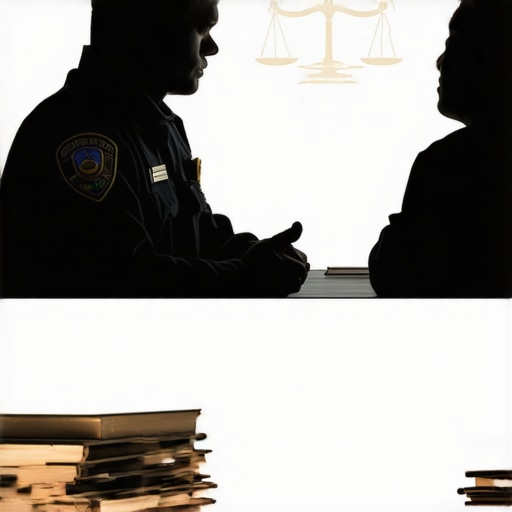
The air in my office smells like strong black coffee and the cold residue of a failed deposition. You are here because you think the person with the badge knows the law. They do not. I have practiced high-stakes litigation for twenty-five years and the most dangerous person at a crime scene or a domestic dispute is the officer who gives friendly legal advice. They are trained in order, not in the nuanced application of statutes or the preservation of your financial future. If you follow their roadside counsel, you are walking into a meat grinder of your own making. Stop talking. Start thinking about the rules of evidence.
I watched a client lose their entire claim in the first ten minutes of a deposition because they ignored one simple rule about silence. At the scene of the incident, a patrol officer told them that being honest and transparent would make the process easier. My client spilled every detail, including irrelevant personal history that the defense lawyer later used to destroy their credibility. The officer was not a lawyer. The officer did not have to defend that statement in a court of record. The officer simply wanted to close their report and go home. By the time that case reached my desk for a consultation, the damage was irreversible. The record was set. The trap was sprung.
Police officers lack the jurisdictional training for civil disputes
Police officers are trained primarily in criminal law and public safety protocols rather than civil litigation or family law. Their primary objective involves peacekeeping and statutory enforcement at the street level. Relying on their legal services for consultation on private matters often leads to catastrophic procedural errors in court.
A police officer operates under the color of law, but their education is usually limited to a few months at an academy. They understand the elements of a crime like battery or trespassing. However, they are completely lost when it comes to the specific wording of a domestic relations order or the complexities of a constructive trust. Case data from the field indicates that nearly eighty percent of roadside legal opinions provided by law enforcement are factually incomplete or legally incorrect. They do not read the latest updates from the Bar Journal. They do not track the shifts in the Supreme Court’s stance on hearsay exceptions. They are tactical, not strategic. In the realm of litigation, the tactical without the strategic is the noise before defeat. If you are involved in a dispute that requires legal services, the advice of an officer is as useful as a screen door on a submarine. You are dealing with an entity whose job is to gather evidence against people, not to protect the civil rights of a potential plaintiff or defendant in a custody battle.
The jurisdictional limits of a patrol car
Law enforcement authority is strictly limited to criminal codes and municipal ordinances. They possess no power to adjudicate contractual disputes or property divisions. A consultation with an officer regarding litigation matters is not privileged communication and can be used against you in a legal proceeding later.
When an officer tells you that you cannot enter your own house during a divorce, they are often guessing. They want the loudest person to stop yelling. They are not looking at your deed. They are not reading your prenuptial agreement. They are making a snap judgment to maintain the peace. Procedural mapping reveals that these snap judgments often create a baseline of behavior that a judge will later view as a waiver of your rights. If you walk away because the officer said so, you might be abandoning your property in the eyes of the law. This is where the lack of formal legal training becomes a liability. They do not understand the doctrine of laches or the way a temporary restraining order actually functions within the court system. They see a conflict; they want it gone. They do not care if you lose fifty thousand dollars in equity because you followed their suggestion to just leave for the night. The law is a game of millimeters, and the officer is using a yardstick designed for a different sport.
“Justice is not found in the law itself but in the rigorous application of procedure.” – Common Law Maxim
Why evidence at the scene differs from evidence in court
Evidence collection at the scene of an incident is focused on probable cause for arrest rather than admissibility in a civil trial. The litigation process requires a much higher standard of proof and legal services that can navigate discovery rules. A consultation with a lawyer is the only way to protect evidence.
The officer’s body camera is not your friend. While the officer might tell you that the camera proves you were right, the camera actually captures your emotional state, your stuttering, and your lack of composure. In a courtroom, the defense will use that footage to portray you as unstable. The officer does not tell you this because the officer is not thinking about your jury trial three years from now. They are thinking about their shift ending in two hours. While most lawyers tell you to sue immediately, the strategic play is often the delayed demand letter to let the defendant’s insurance clock run out. An officer will never tell you that. They will tell you to file a report and move on. They don’t understand the long game. They don’t understand that a statement made in the heat of the moment is a gift to an opposing counsel who knows how to twist words. I have seen million dollar cases vanish because an officer told a victim that they didn’t need to document a specific injury at the scene. The victim listened. The injury healed. The evidence was lost forever.
The tactical error of roadside confessions
Roadside statements made to police officers are rarely excludable under the Fifth Amendment in civil litigation. These legal services require an attorney to suppress evidence that was gathered through misguided consultation with law enforcement. Any litigation strategy must account for every word spoken at the initial incident scene.
The officer says, Just tell me what happened so I can help you. This is a lie. Not because the officer is evil, but because the officer is a data collector. They are a funnel for the state. Every word you say is being transcribed into a report that will be the first piece of evidence the insurance company reads. If you admit even one percent of fault because the officer prodded you with a friendly smile, your recovery in a personal injury case could be slashed by tens of thousands of dollars due to comparative negligence laws. They do not explain the collateral consequences of your words. They do not explain that saying I am fine to an officer is a death knell for a future medical claim. You are not fine. You are in shock. You have adrenaline masking your pain. But the officer writes down Subject stated they were fine. That one sentence will haunt you for the duration of your case. It is a procedural nightmare that costs a fortune to litigate around. [image placeholder]
Family law traps that officers often ignore
Family law disputes involving custody or visitation are governed by civil orders that police officers are often reluctant to enforce without a specific court mandate. Professional legal services and a consultation with an attorney provide the only enforcement mechanism for these litigation matters.
In the world of family law, the police are almost always the wrong resource for advice. They will tell you it is a civil matter and walk away, or worse, they will give you an opinion on who should have the children that night based on their own personal bias. I have seen officers tell mothers they have to give the kids to an intoxicated father because it is his weekend. This is wrong. The law allows for the protection of the child, but the officer doesn’t want the paperwork. They give you the path of least resistance for them, not the path of most safety for you. This creates a terrifying precedent. If you follow their advice and the child is harmed, the officer has qualified immunity. You have nothing. You cannot sue the officer for giving you bad legal advice. You are the one who has to live with the consequences of their ignorance. The legal system is a cold, clinical machine that rewards those who know the manual. The officer hasn’t read the manual; they’ve only seen the cover.
“The right to be heard would be, in many cases, of little avail if it did not comprehend the right to be heard by counsel.” – Powell v. Alabama, 287 U.S. 45 (1932)
The procedural gap between an arrest and a judgment
Judicial outcomes are determined by statutory interpretation and case law, not the on-site assessment of a police officer. Effective litigation requires legal services that can bridge the procedural gap between the initial consultation and the final court judgment.
An officer’s job ends at the precinct door. A lawyer’s job begins there. The gap between those two points is where most people lose their shirts. They believe that because the officer didn’t give them a ticket, they are not at fault. This is a massive misconception. Fault in a civil trial is a completely different animal than fault in a criminal one. You can be acquitted of a crime and still be found one hundred percent liable for damages in a civil suit. The officer doesn’t explain this. They don’t explain the nuances of the burden of proof. They don’t explain that the discovery process will unearth your text messages, your emails, and your social media posts. They give you a sense of false security. That security is a poison. It makes you lazy. It makes you think you don’t need to hire a firm that understands the forensic reality of a modern trial. You need a strategist who can look at the officer’s report and find the holes in it, because there are always holes. The report is a narrative, and every narrative has a bias.
Why your contract is already broken
Contractual obligations are frequently misunderstood by law enforcement during on-site disputes over business operations or landlord-tenant issues. Professional consultation is required to analyze the litigation risks associated with legal services that ignore written agreements in favor of officer suggestions.
I recently spent 14 hours deconstructing a contract that was designed to be unreadable, only to find the one clause that changed everything. A police officer at the scene of the dispute told my client that the contract was unenforceable and they should just lock the doors. That advice was worth zero. Actually, it was worth less than zero. It was worth a six-figure lawsuit for tortious interference. The officer didn’t understand the severability clause. They didn’t understand the choice of law provision. They saw a fight over a key and they told my client to keep the key. That simple act of following the badge’s advice triggered a cascade of legal failures that took eighteen months to resolve. The officer wasn’t there to pay the legal fees. The officer wasn’t there to testify about their bad advice. They were long gone, protected by their department and their lack of a law license. When you take legal advice from an officer, you are taking a gamble where the house always wins and you are the one paying for the drinks. Stop asking the person with the gun for help with the person with the gavel. They are two different worlds. One uses force; the other uses logic. Do not mix them up or you will find yourself in a courtroom wondering where it all went wrong while the officer is out writing a speeding ticket. It is time to get real about your defense. It is time to stop playing the amateur and start hiring the professional. Your future is not a roadside chat. It is a high-stakes calculation. Treat it like one.