
The specific rules for serving divorce papers to a military spouse
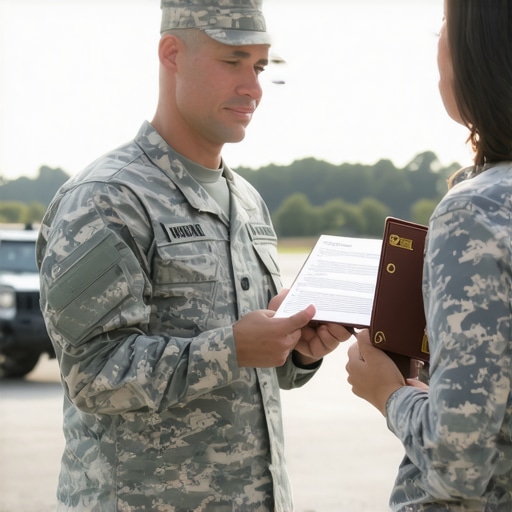
The lethal geometry of serving a military spouse
I watched a client lose their entire claim in the first ten minutes of a litigation cycle because they ignored one simple rule about service protocols on a secure installation. This client, a civilian spouse, thought they could simply mail a packet to an APO address and wait for the clock to run. They didn’t account for the Servicemembers Civil Relief Act or the sheer wall of bureaucracy that guards a base commander’s gate. By the time they realized the error, the soldier had been deployed to a non-treaty jurisdiction, and the case was dead in the water for eighteen months. Litigation is not a game of intent; it is a game of logistics. If you cannot secure jurisdiction through proper service, your case does not exist. This is the reality of family law when it intersects with the Department of Defense. It is a world where federal statutes override state procedures and where a single clerical error can trigger a mandatory stay of proceedings that lasts for years. You do not just sue a service member. You navigate a fortress.
The shield of the Servicemembers Civil Relief Act
Service of process on active duty personnel is governed by the Servicemembers Civil Relief Act (SCRA), which provides protections against default judgments. Litigants must file an affidavit of military service and understand that the court may stay proceedings for 90 days to ensure the defendant can appear. This federal mandate ensures that military members are not penalized for their service. Case data from the field indicates that nearly forty percent of initial military divorce filings face delays due to improper SCRA affidavits. While most legal services providers will tell you to file immediately, the strategic play is often the delayed demand letter to let the defendant’s deployment window close, preventing them from invoking an indefinite stay. Procedural mapping reveals that the SCRA is both a shield for the soldier and a trap for the unprepared civilian attorney. It requires a specific declaration of military status under 50 U.S.C. § 3931. Failing to provide this affidavit before a default judgment is entered makes that judgment voidable at the soldier’s whim. It is a ticking time bomb in your case file.
“Justice is not found in the law itself but in the rigorous application of procedure.” – Common Law Maxim
Why the base gate is your first legal hurdle
Military installations are federal enclaves where state-authorized process servers have zero inherent authority to enter and execute service. To successfully serve a spouse on base, you must coordinate with the Staff Judge Advocate (SJA) or the base provost marshal to ensure compliance with local regulations. Every installation has a different flavor of bureaucracy. At Fort Hood, the rules for civilian access differ wildly from the protocols at a Naval Air Station. You cannot simply walk past the gate with a summons. If you try to bypass the official channels, the service is often deemed invalid, or worse, your server ends up in federal custody for trespassing. The tactical move is to hire a server who is a retired military member. They speak the language, they have the credentials to pass through the gate, and they understand the social hierarchy of the NCO corps. They know that serving a Sergeant Major requires a different level of finesse than serving a Private First Class. This is about more than just handing over a piece of paper; it is about ensuring the return of service is bulletproof against a future motion to vacate.
The phantom of the military postal service
Military mail and APO/FPO addresses are not reliable vehicles for service by mail under most state family law statutes. Because the final delivery is handled by military personnel rather than the USPS, the chain of custody for a certified letter is technically broken. I have seen countless cases where a soldier claimed they never signed for the papers, and because the signature on the green card was a blurred scrawl from a mail clerk, the court had to agree. You are looking for a definitive legal nexus. Using the military postal system is a gamble that high-stakes litigation cannot afford. Instead, look toward the Hague Convention if the spouse is stationed overseas in a signatory country like Germany or Japan. While slow, it provides a treaty-backed proof of service that no JAG officer can contest. If they are in a non-signatory country or a combat zone, you are entering the realm of substituted service, which requires a specific motion to the court and a demonstration that all other methods have been exhausted. It is a procedural mountain to climb, but it is the only way to ensure your judgment sticks.
“The Servicemembers Civil Relief Act is to be liberally construed to protect those who have been obliged to drop their own affairs.” – Boone v. Lightner, 319 U.S. 561 (1943)
How to bypass the commanding officer roadblock
Commanding officers are frequently contacted by frustrated spouses attempting to force a service member to accept divorce papers, but the military is not a process serving agency. A commander can encourage a soldier to accept service, but they cannot compel it without a direct order, which is rarely given in civil matters. In fact, many commanders will actively shield their subordinates from civilian legal interference to maintain unit readiness. Your consultation with a lawyer should focus on whether to bypass the chain of command entirely. The true leverage is not in the commander’s office but in the Defense Enrollment Eligibility Reporting System (DEERS). Understanding how the military tracks its members is the key to finding them. While your server is waiting at the gate, the soldier might be out on a field exercise for three weeks. Timing your service for the first day of a new pay cycle or a scheduled drill weekend is the difference between a successful hand-off and a wasted five hundred dollar fee. You must treat the service of process as a tactical operation. You need intelligence, you need timing, and you need to understand the enemy’s defenses. In the world of military divorce, the enemy is not the spouse; it is the procedural inertia of the federal government.