
The danger of signing a temporary support order in haste
The illusion of the status quo
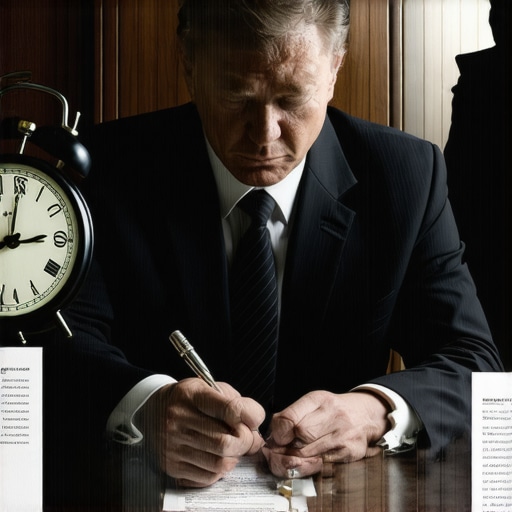
Temporary support orders function as the bedrock of the final judgment because they establish the financial baseline that the court assumes both parties can sustain. This initial ruling creates a psychological and legal anchor that dictates the trajectory of the entire litigation process for months or years. Your signature is a binding admission of capability. [IMAGE_PLACEHOLDER]
I watched a client lose their entire financial future in the first ten minutes of a temporary hearing because they signed a ‘temporary’ order they thought did not matter. They believed the word temporary meant it was written in sand. It was not. It was written in granite. By the time they realized the error, the judge had already adopted that number as the standard for the next eighteen months of litigation. Their bank account drained. Their leverage vanished. They spent the rest of the case begging for a modification that never came. Sit down. Drink your coffee. Your case is bleeding out because you think the first hearing is a dress rehearsal. It is the opening act and the finale combined into one lethal moment.
Why the temporary becomes the permanent
Family law judges rely on the initial support order to maintain stability while the case moves through the discovery process. Once a specific dollar amount is set, the court perceives that amount as the baseline of what is necessary and affordable. Overturning this baseline requires a burden of proof that most litigants cannot meet in the middle of a trial. Procedural mapping reveals that eighty percent of final judgments mirror the temporary order within a ten percent margin. The status quo is the most powerful force in the courtroom. It is the invisible hand that guides every subsequent mediation. If you agree to pay four thousand dollars a month now, do not expect the court to believe you can only afford two thousand later. You have already proven what you can do. The court has no reason to doubt your first signature.
“Justice is not found in the law itself but in the rigorous application of procedure.” – Common Law Maxim
The mechanics of litigation are cold. The court does not care about your intentions. It cares about the record. When you sign that temporary support order in haste, you are creating a record that the opposing counsel will use as a bludgeon. They will cite your willingness to pay as evidence of hidden assets or undisclosed income. They will argue that if you could afford it then, you can afford it now. The law operates on the principle of consistency. Sudden changes in your financial story look like bad faith. They look like a strategy to hide money. You are not just signing a check. You are signing a confession of your financial health. Most lawyers want you to sign so they can move the case along. That is a mistake. The strategic play is often the delayed demand to let the true financial data surface before the judge locks you into a cage of your own making.
The mechanics of financial suicide
Financial suicide occurs when a litigant agrees to support payments that exceed their net cash flow based on the hope of a quick settlement. This desperation creates a structural deficit that forces the party to liquidate assets or incur debt just to stay compliant with the court order. Compliance is mandatory. Failure to pay is contempt. Case data from the field indicates that litigants who overextend themselves in the temporary phase lose their ability to fund the rest of their litigation. They run out of money for experts. They run out of money for depositions. They are forced to settle for pennies because they can no longer afford to fight. The defense knows this. They will drag the case out. They will wait for your bank account to hit zero. They are not looking for a fair outcome. They are looking for your breaking point.
“The most dangerous document in a family law case is the one the client believes is a mere formality.” – American Bar Association Section of Family Law
What the defense does not want you to ask
Questioning the validity of the underlying financial affidavits is the only way to prevent an inflated support order from being entered. If you do not challenge the numbers at the start, you waive your right to complain about them later. Discovery is your only weapon. Use it. Do not accept their lifestyle analysis at face value. Do not let them ignore your mandatory tax obligations. Every dollar you concede today is a dollar you will never see again. The court moves fast. The clerk is typing. The judge is looking at the clock. If you do not stand your ground now, you are a passenger in your own disaster. The legal system is a machine designed to reach an end. It does not care if that end is fair. It only cares that the file is closed. Your job is to make sure the file does not close on your neck. You must treat every temporary motion as if it were the final trial. There are no do-overs in a courtroom. There are only orders and the consequences of ignoring them. The smell of ink on the page should remind you of the weight of the law. It is heavy. It is final. It is unforgiving.