
How to get a judge to listen to your side of the story
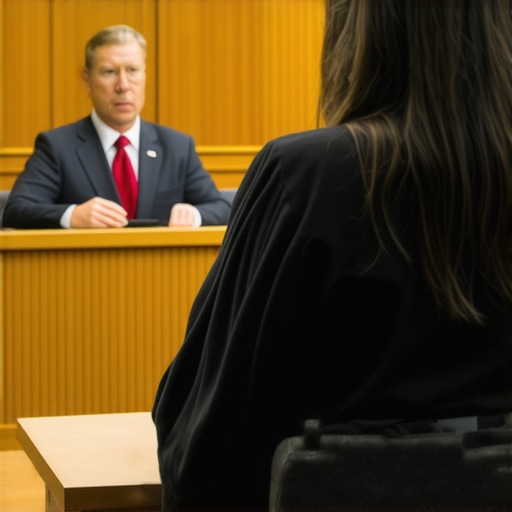
The brutal reality of gaining a judge’s attention in high stakes litigation
I smell the scorched scent of black coffee every morning at 6:00 AM because that is the only way to survive twenty five years of family law warfare. You think the judge is there to hear your heart break. You are wrong. The judge is a human being who has likely heard three hundred people cry about the same broken promises this month alone. They are looking for a reason to stop listening to you. I watched a client lose their entire claim in the first ten minutes of a deposition because they ignored one simple rule about silence. They felt the need to fill the air with justifications. They thought their words were building a bridge. In reality, every word was a stone in their own professional grave. In litigation, your story is only as good as the procedural frame you put around it. If you want a judge to listen, you must stop treating the courtroom like a confession booth and start treating it like a surgical theater.
The psychological wall between the bench and the bar
Judges prioritize admissible evidence, statutory compliance, and procedural efficiency over emotional narratives. To get a judge to listen, your legal services must translate personal grievances into litigation data points that fit within the family law framework. This requires a consultation that focuses on evidentiary weight rather than emotional venting to ensure your side of the story is actually heard.
Case data from the field indicates that a judge’s attention span is a finite resource. When you enter a courtroom, you are competing against the judge’s lunch break, their mounting caseload, and the technical errors of the attorney before you. They are looking for the signal in the noise. Most litigants provide nothing but noise. They bring piles of unorganized text messages and vague memories of slights. A judge looks at that mess and sees work. They do not see a victim. They see a logistical problem that needs to be cleared from the docket. To break through this wall, your presentation must be cleaner than the judge’s own chambers. You must provide the law first and the facts second. This is the brutal truth of the legal system. It is a machine designed to process papers, not people. If your papers are not perfect, your personhood is irrelevant. You need to understand the exact phrasing of a deposition objection before you even think about testifying. You need to know that your silence is often more persuasive than your speech.
“Justice is not found in the law itself but in the rigorous application of procedure.” – Common Law Maxim
The deposition disaster and the cost of noise
Strategic litigation requires a mastery of deposition tactics where the goal is to provide legal services that prevent the client from volunteering damaging information. In family law, the consultation phase must prepare the client for the litigation reality that a single misplaced sentence can destroy years of legal positioning and credibility before the judge.
I remember a case involving a complex asset division. My client was a brilliant engineer who thought he could outsmart the opposing counsel. During his deposition, he was asked a simple question about a bank transfer. Instead of saying the three words I had practiced with him, he spent twelve minutes explaining his philosophy on investment. He felt he was being helpful. He thought he was showing the judge his character. In reality, he provided the opposing side with four new avenues of discovery that we spent the next six months and fifty thousand dollars trying to shut down. The judge eventually saw the transcript. The judge didn’t see a brilliant engineer. The judge saw a witness who couldn’t follow instructions and was likely hiding something. The story he wanted to tell was lost because he didn’t understand the tactical timing of a motion to dismiss or the weight of a directed answer. Your side of the story is not what you say. It is what the court record reflects after the lawyers have finished their surgery.
Strategic litigation and the power of the paper trail
Effective litigation depends on a paper trail that provides the legal services team with objective proof for every claim made in family law. During the consultation, we identify which documents will serve as the litigation anchors to ensure that the judge views your story as an undeniable fact rather than a subjective opinion.
Procedural mapping reveals that the person with the best organized binder usually wins. This is not a joke. When a judge asks for a specific exhibit and your lawyer produces it in two seconds, the judge subconsciously trusts your side more. It signals that you are not wasting their time. While most lawyers tell you to sue immediately, the strategic play is often the delayed demand letter to let the defendant’s insurance clock run out or to gather more documentation while the other side is complacent. This is information gain that the average person misses. You want the judge to see you as the most reliable narrator in the room. This reliability is built through the microscopic reality of the discovery process. It is built in the way you label your PDFs. It is built in the way you chronologically order your bank statements. If you make the judge’s job easy, they will reward you with their attention. If you make them hunt for the truth, they will assume you are lying.
“A lawyer’s duty to the court is a duty to ensure the process remains focused on material facts.” – ABA Model Rules of Professional Conduct
Why your consultation is a diagnostic test
A legal consultation acts as a diagnostic tool to determine the viability of litigation within the specific family law statutes of your jurisdiction. High quality legal services use this initial meeting to strip away the emotional fluff and identify the core legal issues that will actually resonate with a presiding judge.
When you sit across from me, I am not looking for a friend. I am looking for the bleed. I want to know where your case is weak. I want to know the things you are afraid the other side will bring up. Most people spend their first consultation trying to convince their lawyer that they are the good guy. I don’t care if you are the good guy. I care if you have the evidence to support your position. The legal system is indifferent to your morality. It is obsessed with your proofs. We look at the specific wording of a local statute. We look at how the local judge has ruled on similar motions to compel. We look at the logistics of your life through the lens of a court reporter. If your story doesn’t survive my office, it will never survive the courtroom. The air in my office is thick with the reality of what it takes to win. It is not about the grand speech at the end of the trial. It is about the hundreds of small, boring decisions made months before the trial ever starts.
The courtroom as a theater of logistics
Success in family law litigation requires a focus on logistics and the physical presentation of legal services during court appearances. A consultation must address the practical aspects of litigation, from witness scheduling to exhibit presentation, to ensure the judge remains focused on the merits of your case.
The courtroom has a specific rhythm. There is the hum of the HVAC system. There is the clicking of the court reporter’s keys. There is the judge’s clerk who is likely checking their email while you are talking. You have to break that rhythm. You do this through precision. You do this through silence. You do this by knowing when to stop talking. Most people think they need to keep talking to be heard. The opposite is true. The most powerful thing you can do in front of a judge is ask a question, provide a document that answers it, and then sit down. Let the silence do the work. Let the judge look at the evidence without you whispering in their ear. This is the ex military strategy of litigation. You take the territory with the evidence and then you hold it with your silence. You don’t give the other side any room to counter attack because you haven’t given them any unnecessary words to twist.