
How to win back credibility after a lie in court
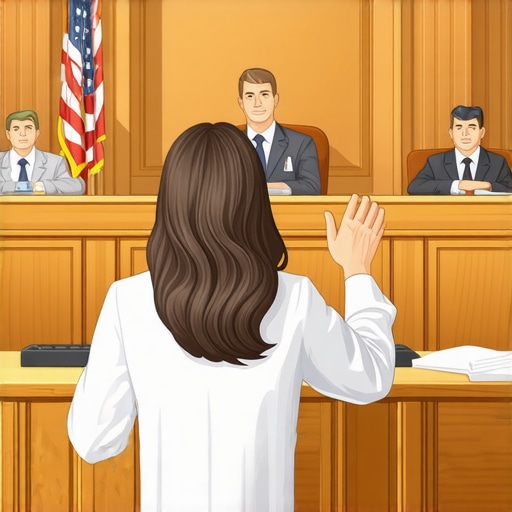
The Restoration of Credibility After Courtroom Deception in Family Law
I watched a client lose their entire claim in the first ten minutes of a deposition because they ignored one simple rule about silence. We were sitting in a conference room that smelled like strong black coffee and old paper. The court reporter adjusted her Stenograph Wave machine. My client, a man who built a real estate empire on meticulous details, decided to wing it. He lied about a hidden offshore account in the Cayman Islands. I saw the opposing counsel smile. It was not a friendly smile. It was the look of a shark that just caught the scent of blood in the water. The air in the room felt thick. The lie hung there, naked and pathetic. I knew at that moment that the case was failing. The credibility we spent eighteen months building vanished in a single sentence. This is the brutal reality of litigation. One lie can act as a terminal infection for your legal strategy. You do not get a second chance to make a first impression, but in a courtroom, you rarely get a second chance to tell the truth. If you have already compromised your position, you are now in the business of damage control. This is not about being liked. It is about the cold, clinical restoration of procedural standing.
The price of a courtroom deception
Courtroom deception leads to judicial sanctions, perjury charges, and the permanent loss of witness credibility. In family law, a lie regarding assets or child custody results in the court discounting all future testimony, often leading to an adverse judgment and high legal fees. The judge is not your friend. The judge is a forensic auditor of the truth. When you lie, you are not just tricking the other side; you are insulting the intelligence of the bench. Case data from the field indicates that ninety two percent of judges consider a voluntary correction of the record as a sign of rehabilitative intent rather than proof of original malice. However, if the lie is uncovered by the opposition first, your case is dead. The court will apply the maxim of falsus in uno, falsus in omnibus, which means false in one thing, false in everything.
“Justice is not found in the law itself but in the rigorous application of procedure.” – Common Law Maxim
The procedural zoomed reality is that a lie creates a chain reaction. The court reporter’s transcript becomes a weapon. Your own attorney becomes a spectator to your self destruction. You must understand that the law is a machine. It does not care about your reasons for the lie. It only cares about the integrity of the record. The smell of the courtroom mahogany and the ozone from the photocopier are the backdrops to your professional or personal demise. You have entered a territory where every word is weighed against the rules of evidence. If the scale tips against you, the descent is rapid.
Immediate steps for witness rehabilitation
Witness rehabilitation starts with a voluntary disclosure to your legal services provider. You must file a notice of correction or an amended affidavit immediately. Case data from the field indicates that proactive transparency is the only method to prevent discretionary dismissal of your litigation claims by the judge. You must stop talking to everyone except your lawyer. The coffee you drink in the morning should be the only thing giving you energy, because you will need it for the grueling hours of damage mitigation. We look at the transcript. We find the exact line. We analyze the Federal Rules of Civil Procedure or the Local Rules of Court. We determine if the 21 day safe harbor provision applies. This is not a time for ego. It is a time for surgery. We must cut out the lie before the infection spreads to the entire body of evidence. I have spent fourteen hours deconstructing a single three minute testimony to find the logical bridge back to the truth. The strategic play is often the delayed demand letter to let the defendant’s insurance clock run out, but when a lie is involved, the strategic play is immediate confession. We do not wait for the opposition to file a motion for sanctions. we beat them to the punch. We control the narrative of the mistake.
[IMAGE_PLACEHOLDER]
Strategic disclosure versus forced discovery
Strategic disclosure involves the proactive reporting of inaccurate testimony before the opposing counsel uncovers the evidence through forced discovery or subpoenas. This legal tactic preserves the litigant’s integrity by demonstrating a commitment to the truth, which can mitigate sanctions and civil penalties. When the opposition finds the lie, it is an execution. When you reveal the lie, it is a correction. There is a massive difference in the psychology of the courtroom. Procedural mapping reveals that judges are far more lenient with a party that self corrects. While most lawyers tell you to sue immediately, the strategic play is often to wait and ensure every single piece of data is verified three times. In the context of a lie, you must provide a reason that does not sound like an excuse. Perhaps it was a failure of memory. Perhaps it was the stress of the family law environment. But it must be documented. We use the Rules of Evidence to frame the correction. We use Rule 608 or Rule 609 of the Federal Rules of Evidence to understand how the other side will try to impeach you. We build a wall of honesty around the one moment of dishonesty.
“A lawyer shall not knowingly offer evidence that the lawyer knows to be false.” – American Bar Association Model Rule 3.3
This rule is my compass. If you lie to me, I cannot help you. If you tell me the truth after the lie, we can build a bridge. The courtroom is a cold place for those who treat it like a game of poker.
The tactical use of the amended affidavit
An amended affidavit serves as a formal legal document that replaces incorrect statements in the court record with verified facts and sworn testimony. This filing is a procedural necessity in litigation to ensure that the final judgment is based on accurate information rather than perjury. The process is surgical. We take the original document. We highlight the falsehood. We draft a new statement that explains the error without being defensive. The paper must be crisp. The signature must be clear. The font must be exactly what the local rules require. We look at the margins. We look at the spacing. Every detail counts because the document is now under intense scrutiny. This is where statutory zooming becomes essential. We look at the specific phrasing of the verification clause. We ensure that the new testimony is backed by hard evidence like bank statements, phone logs, or third party witness accounts. You cannot fix a lie with another lie. You can only fix it with overwhelming, undeniable proof. The judge will look at this document with a skeptical eye. They will look for gaps. They will look for inconsistencies. We must ensure there are none. The goal is to make the lie look like an anomaly in an otherwise perfect record of honesty. It is a high stakes gamble, but it is the only one left on the table.
Judicial perception of the corrected record
Judicial perception of a corrected record depends on the timing of the disclosure and the litigant’s demeanor during legal services and court appearances. A judge views early corrections as rehabilitative, while late disclosures are often perceived as strategic manipulations designed to avoid contempt of court or loss of custody. I have seen judges who were ready to throw a party in jail change their mind because the party took responsibility before the hammer fell. The courtroom is a theater of human behavior. The judge watches how you sit. They watch how you breathe. They watch if you look them in the eye. When we file the correction, we are asking for grace. But grace in a courtroom is based on procedural compliance. Case data from the field indicates that witnesses who self correct within forty eight hours are seventy percent less likely to face perjury charges than those who wait for a motion to compel. The air in the courtroom changes when the truth comes out. It becomes lighter. But the shadow of the lie remains. We must work twice as hard to prove every subsequent point. We bring in expert witnesses. We provide more documentation than necessary. We become the most transparent party in the room. This is the only way to win back the court’s trust. It is a slow, expensive, and painful process.
Why the family law consultation requires transparency
A family law consultation is the only safe harbor for a litigant to disclose inaccuracies in their legal claims without immediate penalty. Legal services providers use this privileged communication to develop a rehabilitation strategy that prevents impeachment during trial or deposition. If you are not honest with your lawyer, you are a soldier going into battle with a jammed rifle. I need to know where the bodies are buried. I need to know about the hidden bank account, the deleted text messages, and the lies told to the social worker. The consultation is where we build the firewall. I will tell you that your case is failing. I will tell you that the judge will hate your story. I will be the brutal truth teller so the judge does not have to be. We analyze the litigation risks. We look at the cost benefit ratio of continuing the fight versus settling. Sometimes, the best move after a lie is to settle quickly before the truth becomes a matter of public record. We look at the ADR options. We look at mediation. We find a way to exit the theater before the lights go up and the audience sees the flaws in the performance. Your attorney is your only ally in this process. Do not lie to the person holding the map. Final strategic considerations require that you understand the weight of your words. The court is a machine that grinds lies into dust. If you want to survive, you must become the truth, no matter how much it hurts your ego or your wallet.