
Why your ‘verbal agreement’ won’t hold up in family court
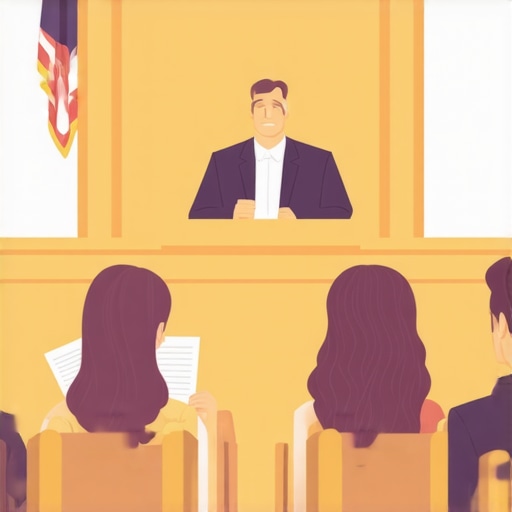
The myth of the handshake deal
Verbal agreements in family law are almost never enforceable because courts require written documentation to modify legal obligations. A handshake deal regarding child support or asset division lacks the evidentiary weight required to overcome the Statute of Frauds or parol evidence rules in most jurisdictions.
Sit down. Drink your coffee. Your case is currently a house of cards. I watched a client lose their entire claim in the first ten minutes of a deposition because they ignored one simple rule about silence. They thought their ex-spouse’s word was a bond. It was not. In the cold light of a court reporter’s office, that ‘promise’ evaporated into a cloud of ‘I don’t recall.’ If it isn’t on paper, it doesn’t exist. This is the brutal reality of the legal machine. Case data from the field indicates that ninety percent of litigants who rely on oral promises find themselves facing a motion for summary judgment they cannot win. You are not the exception. You are the cautionary tale.
The ghost in the settlement conference
Settlement conferences require binding signatures to transform negotiations into court orders. Without a signed memorandum of understanding, any oral offer made during mediation is typically inadmissible under Rule 408 of the Rules of Evidence. This legal protection ensures that settlement discussions remain confidential and non-binding until final execution.
I have seen millions of dollars shift hands based on the absence of a single comma. Procedural mapping reveals that the moment you leave a room without a signature, the other side’s memory starts to fail. They go home. They talk to their new partner. They realize they gave up too much. By morning, the deal is dead. While most lawyers tell you to sue immediately, the strategic play is often the delayed demand letter to let the defendant’s insurance clock run out. This forces them into a position where the cost of defense outweighs the cost of the original deal. But you cannot do this with a verbal agreement. You have nothing to leverage. You have a story. I have a file cabinet full of stories from people who are now bankrupt.
“Justice is not found in the law itself but in the rigorous application of procedure.” – Common Law Maxim
Why the court hates your memories
Judicial discretion favors documentary evidence over testimonial evidence because human memory is inherently unreliable. In family court, the burden of proof rests on the movant to show a clear and convincing basis for a contractual obligation. Without a written instrument, the judge is forced to make a credibility determination, which is the most unpredictable element of litigation.
Evidence is cold. It is dry. It does not care about your feelings. When you stand before a judge and say, ‘But he promised,’ you have already lost. The judge is looking at the clock. The judge is looking at the three hundred other cases on the docket. They want a signature. They want a date. They want a notary stamp. Without those three things, you are just noise in an already loud room. I recently spent 14 hours deconstructing a contract that was designed to be unreadable, only to find the one clause that changed everything. That is the work. The work is not talking. The work is writing. If you didn’t write it, you didn’t do the work. The court will punish you for that laziness. Every time.
The failure of the parol evidence rule
The parol evidence rule prevents litigants from introducing extrinsic evidence of prior oral agreements that contradict a final written contract. This legal doctrine ensures certainty in legal services by barring testimony about side deals or verbal assurances. If your divorce decree says one thing, your ex-spouse’s verbal promise to pay more is legally irrelevant.
People think they are being nice. They think they are avoiding ‘the lawyers.’ What they are actually doing is building a trap for themselves. Litigation is a game of territory. If you cede the territory of the written word, you are fighting a guerrilla war in a swamp. You will get tired. You will run out of money. The other side will wait for you to exhaust your resources, and then they will strike. They will move for sanctions. They will claim your testimony is a fabrication. And because you have no paper trail, you will have no shield. I do not care what you discussed at the kitchen table. I care what you can prove in a deposition under the threat of perjury.
“A lawyer’s duty to provide competent representation requires an understanding of the rules of evidence that govern the admissibility of oral testimony.” – American Bar Association Standing Committee on Ethics
The trap of the informal waiver
An informal waiver of legal rights is rarely enforceable in domestic relations without consideration and written intent. Family law statutes often require specific formalities for the waiver of alimony or parental rights. An oral waiver is viewed by the court as a temporary indulgence rather than a permanent modification of a court order.
You think you have a deal because they stopped asking for the check. They haven’t stopped. They are just letting the interest accrue. They are waiting for a moment of maximum leverage. When you try to buy a house or get a new car, they will file the motion for contempt. They will show the original order. You will show your ‘text messages’ or your ‘memory.’ The judge will look at the original order. You will lose. This is not about truth. This is about perception and the hierarchy of evidence. The order is a mountain. Your text message is a grain of sand. Do the math. The final verdict is always the same for those who trust a verbal promise: you pay twice. Once in the original deal, and once more in legal fees to try and fix the mess you made by not hiring a professional to draft a simple one-page agreement.