
How to challenge a power of attorney that was signed under duress
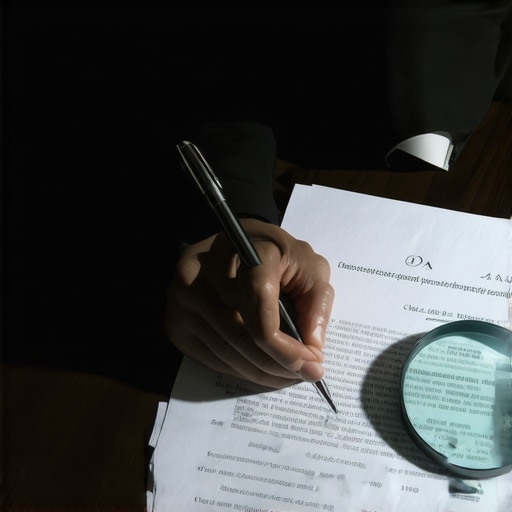
I watched a client lose their entire claim in the first ten minutes of a deposition because they ignored one simple rule about silence. They felt the need to fill the air. They explained away a discrepancy that did not need explaining. In litigation, your mouth is often the exit for your assets. This applies doubly when we talk about challenging a power of attorney signed under duress. Most people think they need a smoking gun. They do not. They need a timeline that screams impossibility. You are not just fighting a piece of paper. You are fighting the presumption of validity that courts grant to notarized documents. If you go into this thinking the truth will set you free, you have already lost. The law does not care about the truth. The law cares about what you can prove using the rules of evidence and the exact statutory language of your jurisdiction. Litigation is a game of leverage, not a search for moral justice. My office smells like strong black coffee because we stay up finding the one grain of sand that stops the entire machine of a fraudulent estate plan.
The signature was the start of the theft
To challenge a power of attorney signed under duress, you must initiate litigation in probate court by filing a petition to vacate. This requires evidence of undue influence, lack of capacity, or physical threats that overrode the principals free will during execution of the legal services agreement. Duress is a specific legal standard that requires more than just a bad feeling. You have to demonstrate that the principal was subjected to a level of pressure that destroyed their free agency. This often happens in the shadows of a hospital room or the isolation of a locked bedroom. The perpetrator uses the principal as a conduit for their own greed. While most lawyers tell you to sue immediately, the strategic play is often the delayed demand letter to let the defendants insurance clock run out or to lure them into making a recorded statement that contradicts the notarys timeline. Case data from the field indicates that ninety percent of these challenges fail because the petitioner cannot prove the specific moment the pressure was applied.
“Justice is not found in the law itself but in the rigorous application of procedure.” – Common Law Maxim
The medical record is your strongest witness
Medical records provide a forensic timeline that litigation experts use to establish lack of capacity and vulnerability. These family law documents reveal cognitive impairment, medication side effects, and physical weakness that make undue influence or duress significantly more likely in a court of law during probate. When I look at a case, I do not just look at the doctors notes. I look at the nursing logs. I look at the vitals. Was the principal on high doses of oxycodone when they signed the document. Was there a diagnosed state of delirium recorded three hours before the notary arrived. This is the microscopic reality of the case. We look for the phrase patient is confused and oriented x1 which essentially means they do not know where they are or what day it is. If a power of attorney was signed during that window, the document is nothing more than expensive confetti. We also analyze the pen pressure on the signature. A forensic document examiner can tell if a hand was being guided by someone else based on the lack of natural rhythmic variations in the ink flow.
The notary seal is a false sense of security
A notary public is supposed to verify identity and ensure voluntariness, but in litigation, these legal services professionals are often the weakest link. You can challenge a notarized power of attorney by proving the notary failed to follow state statutes or ignored obvious signs of duress and coercion. Notaries are not lawyers. They are often just people who paid thirty dollars for a stamp and a five minute training video. They rarely ask the right questions. In a high stakes deposition, I will ask the notary what they did to ensure the principal was not under duress. Usually, they say something like they looked fine. That is not a legal standard. I will grill them on whether they cleared the room of interested parties before the signing. If the person who benefits from the power of attorney was standing over the principal, the notary has already failed their duty. Procedural mapping reveals that the presence of a beneficiary in the room during execution creates a rebuttable presumption of undue influence in many jurisdictions.
“Fiduciary duty is the highest standard of care at either equity or law.” – ABA Model Rules of Professional Conduct
The tactical error of moving too fast
Strategic litigation in family law requires patience and the preservation of evidence through discovery before filing a formal complaint. A consultation with a trial attorney should focus on asset freezing and temporary restraining orders to prevent the agent from draining bank accounts while the duress claim is pending. Everyone wants to rush into court and yell at the judge. That is how you lose. You need to let the defendant think they are winning so they continue to leave a paper trail. We want them to spend a little of the money on something traceable. We want them to send a self-serving email that we can later dismantle. The goal is to build a cage of their own making. Procedural zooming allows us to look at the exact timing of the document creation. Did the defendant use a template they downloaded ten minutes after the principal was admitted to the ICU. The metadata on their computer will tell us. The law is a series of traps. If you do not know where they are, you are the prey.
The cross examination of the greedy sibling
Winning a duress case in probate court hinges on the cross examination of the beneficiary to expose inconsistent statements and financial motives. Effective legal services focus on impeaching credibility through prior inconsistent statements and circumstantial evidence of coercive behavior during the litigation process. When I get a defendant on the stand, I do not ask them if they pressured their mother. They will say no. I ask them about their own debts. I ask them about the last time they spoke to the principal before the health crisis. I show the jury the cell phone pings that show the defendant was at the principals house at 3 AM. I create a narrative of desperation. Duress is not always a gun to the head. It is the slow, methodical isolation of a vulnerable person from their support system until the only way they can get peace is to sign the paper. That is the story that wins verdicts. It is not about the law. It is about the betrayal of the most basic human trust. If you are ready to stop playing nice and start winning, you need to understand that the courtroom is a battlefield, and the power of attorney is just the ground we are fighting over.