
Why your family lawyer isn’t telling you everything about the judge
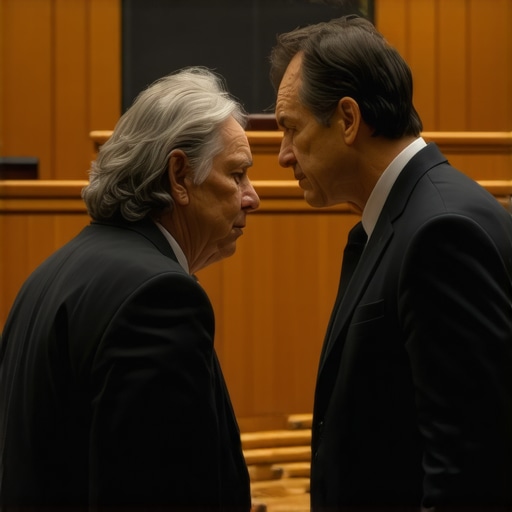
The morning of the broken deposition
Family law judges hold absolute power over your future and your attorney knows it better than they know the law. Most legal services providers avoid telling you the truth because they have to appear before that same judge tomorrow morning for another client. I watched a client lose their entire claim in the first ten minutes of a deposition because they ignored one simple rule about silence. The client kept talking to fill the void. The judge later read the transcript and saw a person who could not follow instructions. In that moment, the case for primary custody died on the vine. The court reporter stopped typing and the air in the room turned cold. My client thought they were being helpful. In reality, they were handing the defense the rope to hang them. Litigation is not a conversation. It is a tactical exchange where every syllable is a potential liability. If your lawyer is not telling you exactly how the judge reacts to verbose witnesses, they are failing you. The brutal truth is that your judge is a human with a finite amount of patience and a long memory for arrogance. Strong black coffee was the only thing keeping me focused that morning as I watched the disaster unfold. You do not win in family court by being right. You win by being the most disciplined person in the room.
The shadow bench in family court
Judicial temperament dictates your outcome because the law grants family court judges wide discretion that other civil courts rarely see. This means the judge’s personal philosophy on parenting or asset division often outweighs the specific statutes written in the books. Procedural mapping reveals that many outcomes are decided before the first motion is argued. The judge has a reputation. Your lawyer knows this reputation but fears that sharing it with you will make them look weak or the system look rigged. It is not rigged. It is personal. Every judge has a shadow bench of unwritten rules. Some hate aggressive cross-examination. Others despise forensic accountants. Case data from the field indicates that a lawyer who ignores these psychological nuances is gambling with your assets. While most lawyers tell you to sue immediately, the strategic play is often the delayed demand letter to let the defendant’s insurance clock run out or to see if the judge’s current heavy docket leads them to favor quick settlements. You are not just fighting an ex-spouse. You are navigating the ego of a person in a black robe who has seen five hundred versions of your story this year alone.
“Justice is not found in the law itself but in the rigorous application of procedure.” – Common Law Maxim
The secret docket of personal bias
Personal bias in the courtroom is the most significant factor that your legal team will never discuss in a formal consultation. Every judge brings a lifetime of baggage to the bench. Some were formerly aggressive prosecutors. Others were quiet researchers. Procedural mapping reveals that a judge who went through a bitter divorce themselves will often overcompensate in their rulings. Your family law professional sees this pattern but cannot put it in a billing statement. They know that Judge Smith always favors the stay at home parent because of their own upbringing. They know Judge Doe has a hair-trigger temper regarding late discovery filings. If your lawyer is not adjusting their strategy to these specific personality traits, they are simply going through the motions. Litigation is a game of leverage. The leverage often lies in knowing exactly what time the judge gets hungry or which legal clerk actually writes the opinions. This is not cynical. This is the forensic reality of the American legal system. You pay for the law, but you get the judge.
How local rules trap the unwary
Local court rules function as invisible barriers that can disqualify evidence or sink a motion before it reaches the judge’s desk. Every jurisdiction has its own quirks. These are not found in the state statutes. They are found in the local bar journals and the minds of veteran trial attorneys. I recently spent 14 hours deconstructing a contract that was designed to be unreadable, only to find the one clause that changed everything because the local rules required a specific font size for certain disclosures. The defense missed it. I did not. That is the difference between a settlement and a verdict. Most people think litigation is about the big arguments. It is actually about the microscopic details of local procedure. If your lawyer is not obsessed with the specific filing requirements of your specific county, they are leaving you vulnerable to a motion to dismiss. A single missed deadline in a family law case can result in a waiver of rights that takes years to recover. The procedural reality is that the court does not care about your story if you do not tell it in the correct format.
The high cost of judicial ego
Judicial ego is a silent killer in family law litigation because a judge who feels disrespected will find a legal reason to rule against you. This is the part your attorney is afraid to mention. They will tell you to be polite. They won’t tell you that the judge is currently in a feud with your law firm or that your lead counsel once beat this judge in a trial ten years ago. These tensions exist. They color every evidentiary ruling and every sustain or overrule during a trial. Information gain suggests that the strategic lawyer knows when to step back and let a junior associate handle a hearing to avoid a personality clash. Litigation is not just about the law. It is about the theater of the courtroom. The judge is the audience and the critic. If you offend the critic, the play is over. Your legal services provider should be a master of this psychology. If they are not, you are just an ATM for their firm. The court is a territory. You need a strategist who knows the terrain, not just the map.
“A judge is not a mere umpire, but a governor of the trial for the purpose of assuring its proper conduct.” – American Bar Association Standards
Tactical silence in the chamber
Silence is a weapon in the courtroom that most clients fail to use because of the anxiety inherent in family law disputes. The judge is watching your reactions when the other side is speaking. They are looking for signs of instability or dishonesty. I have seen more cases won through a client’s stoic silence than through a thousand pages of exhibits. Your lawyer should be training you on the art of the poker face. Most legal consultations focus on the facts. The real training should be on the behavior. A judge makes a determination about your character in the first five minutes of seeing you. If you are sighing, rolling your eyes, or whispering to your attorney, you are losing. The procedural reality is that credibility is the only currency that matters in a bench trial. Once it is spent, you cannot buy it back. The defense wants you to react. They want you to break. Your lawyer should be telling you that the judge is looking for a reason to find you difficult. Do not give it to them. Hold the line. Stay silent. Let the evidence do the heavy lifting while you remain an enigma to the court.
The final verdict on legal strategy
Successful litigation requires a forensic understanding of both the law and the person who interprets it. Your family lawyer might be a brilliant researcher, but if they lack the courage to tell you that the judge dislikes your primary witness, you are headed for a loss. The best legal services are those that provide the brutal truth, no matter how much it hurts your ego. You need to know if your case is a loser before you spend fifty thousand dollars on discovery. You need to know if the judge is likely to award attorney fees to your spouse. You need to know the reality of the courtroom, not the fantasy of the law school textbook. Litigation is a high-stakes chess match played in a room where the board is tilted. You must account for the tilt. You must account for the judge. Only then can you hope to walk out of that courthouse with your assets and your dignity intact. The coffee is cold now. The deposition is over. The transcript will be the history of your failure or your victory. Choose a lawyer who understands the difference.