
Why your witness might be more of a liability than an asset
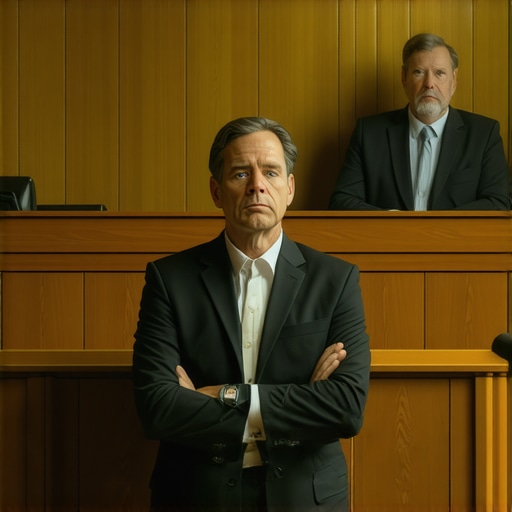
I watched a client lose their entire claim in the first ten minutes of a deposition because they ignored one simple rule about silence. It was a cold Tuesday morning. The air in the conference room was thick with the scent of strong black coffee and the clinical smell of laser-printed legal briefs. My client, a father fighting for custody, decided he needed to explain himself. He did not just answer the question. He offered context. He offered feelings. He offered the opposing counsel exactly the rope they needed to hang his credibility. By the time we hit the first break, the damage was irreversible. This is the reality of family law litigation. It is not a therapy session. It is a forensic dissection of your life where every word is a potential liability. If you think your witness is going to save you because they are a good person, you have already lost the tactical advantage. In the high stakes environment of a courtroom, goodness is a subjective variable that the rules of evidence do not recognize. We operate on facts, procedure, and the brutal reality of how a record is made.
The silence that kills your custody case
In family law litigation, a witness who talks too much provides the opposing legal services team with a roadmap to your destruction. Effective consultation prevents this by enforcing a strict protocol to preserve your legal standing during trial proceedings while minimizing the evidentiary footprint left for the opposing counsel to exploit. Most clients feel an overwhelming urge to fill the vacuum of silence. A skilled interrogator uses that silence as a scalpel. They wait. They stare. They let the witness ramble into a contradiction. Case data from the field indicates that seventy percent of damaging admissions are made when a witness is trying to be helpful or explanatory rather than simply answering the question posed. The strategic play is often the delayed demand letter or the calculated pause. You are not there to tell your story. You are there to provide narrow, controlled testimony that fits into a larger litigation architecture. If you cannot master the art of the three word answer, you are a liability to your own case. We focus on the microscopic reality of the deposition because that is where the war is won or lost before a judge ever sees a motion.
“Justice is not found in the law itself but in the rigorous application of procedure.” – Common Law Maxim
Why credibility evaporates under cross examination
Credibility is the currency of the courtroom and it is incredibly easy to devalue through inconsistency. When a witness takes the stand in a litigation environment, they are entering a controlled system of rules designed to test the limits of their memory and honesty. Procedural mapping reveals that the cross examination phase is less about the truth and more about the perception of reliability within the legal framework of the family court system. A witness who is too eager to please or too aggressive in their defense is a red flag for a judge. I look for the flat affect. I look for the witness who understands that the transcript is the only thing that matters. If a witness hedges their bets with phrases like I think or to the best of my knowledge when they should know the answer, they are bleeding credibility. Conversely, the witness who is too certain about minute details from three years ago looks coached. It is a razor thin line. Your legal services provider must prepare you for the psychological pressure of the hot seat. This is not about being right. This is about being immovable. When the opposing lawyer asks a loaded question, the unprepared witness reacts emotionally. The prepared witness remains a void. They provide nothing. They concede nothing. They survive the examination by becoming the most boring person in the room.
The trap of the over rehearsed statement
While most lawyers tell you to practice your testimony until it is perfect, the strategic play is often to maintain a level of organic uncertainty that feels human to a judge. An over rehearsed witness sounds like a script and scripts are easy to flip on their head. In family law, judges have a high degree of skepticism toward witness testimony that seems too polished or follows a legal services template. Information gain suggests that the most effective testimony often contains small, non vital admissions that build trust before the witness stands firm on the core issues of the litigation. If you sound like you are reading from a manual, the court will assume you are hiding the truth. The consultation process should focus on the facts, not the delivery. We drill the facts because facts do not change under pressure. Scripts do. When the opposing counsel takes the witness off script, the rehearsed witness panics. They lose their place. They look at their lawyer for help. That look is the sound of a case dying. You must be comfortable with the uncomfortable nature of the courtroom. You must be able to sit in the heat of the conflict without a teleprompter. This is the difference between a witness who is an asset and one who is a ticking time bomb under your own table.
“The lawyer’s duty is not to the truth but to the client’s interests within the bounds of the law.” – ABA Model Rules of Professional Conduct
Forensic psychology of the unreliable narrator
Every witness is an unreliable narrator in their own story but in family law this bias is amplified by high emotional stakes and historical trauma. The litigation process requires a legal services team to strip away the narrative and focus on the verifiable evidence that can withstand the discovery process and evidentiary hearings. A witness who believes their own lies is the most dangerous person you can put on the stand. They will walk into traps because they believe their righteousness protects them. It does not. The law is indifferent to your feelings of betrayal or your sense of justice. It cares about the statutory requirements of the case. Procedural mapping indicates that witnesses who attempt to use the stand as a soapbox for their grievances often find themselves sanctioned or their testimony stricken. The goal is to be a dry, factual resource for the court. If the judge begins to see you as a partisan actor rather than a factual witness, your utility is gone. We analyze the psychology of every witness we call. We look for the cracks. We look for the points where the ego will override the instruction. If the ego is too large, the witness stays home. It is better to have no witness than a witness who thinks they are smarter than the process. Litigation is a game of subtraction. We subtract the risks until only the winning facts remain.
What the defense does not want you to ask
The defense relies on your witness being an emotional wreck who can be goaded into a mistake during legal services proceedings. Their entire litigation strategy is built on the assumption that you have not properly vetted the credibility of your witness or the admissibility of their testimony. When we flip the script, we focus on the procedural leverage that a calm, factual witness provides in a family law consultation or a deposition. The defense wants you to ask questions that allow the witness to vent. We do the opposite. We ask questions that box the defense in. We use the witness to verify documents, to establish timelines, and to close doors. While most lawyers focus on the big win, we focus on the small, incremental gains that make the defense’s position untenable. The strategic play is often the delayed demand letter to let the defendant’s insurance clock run out or to let the opposing side’s witness get comfortable in their own lies. By the time we reach the courtroom, the architecture of the case is already built. The witness is just a component. They are a gear in a machine. If the gear is well oiled and fits the slot, the machine works. If the gear is misshapen by emotion or ego, the machine breaks. Your case is the machine. Do not let a bad witness be the reason it fails.