
The problem with using text messages as sole evidence in court
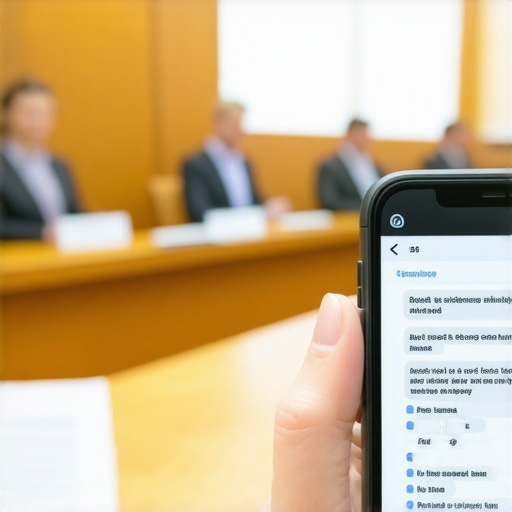
The digital trap of relying on text messages in litigation
I watched a client lose their entire claim in the first ten minutes of a deposition because they ignored one simple rule about silence. They walked into that room smug. They had a folder of printed screenshots that they believed would end the case. They thought these messages were the absolute truth. Instead, those papers became the anchor that dragged their entire legal strategy to the bottom of the ocean. The defense counsel did not even argue the facts. They argued the procedure. They questioned the chain of custody. They challenged the authenticity of the contact name. They pointed out the gaps where the client had deleted their own aggressive replies to look like a victim. By the time the court reporter called for a break, the evidence was inadmissible and the client was exposed. This is the reality of family law and civil litigation in the modern era. If you rely on a screenshot as your primary weapon, you are bringing a plastic knife to a tactical firearm engagement.
Why screenshots are the lowest form of legal evidence
Screenshots are considered low grade evidence because they lack the underlying metadata required to prove authenticity under Federal Rule of Evidence 901. In family law and general litigation, a screenshot is merely a picture of a screen. It does not prove who sent the message, whether it was altered, or if the context was intentionally manipulated through selective deletion. Judges in high stakes legal services environments are increasingly skeptical of digital captures that do not include a full forensic export. A screenshot does not show the SQLite database entry on the device. It does not show the header information. It does not show the network handshakes. Without these forensic markers, the opposition can argue that the message was created using a spoofing application. They can claim you renamed a contact in your phone to their client’s name and texted yourself. If you cannot disprove that possibility with technical data, your evidence is a liability.
“Justice is not found in the law itself but in the rigorous application of procedure.” – Common Law Maxim
The hearsay hurdle that kills digital testimony
Hearsay rules generally prohibit out of court statements from being used to prove the truth of the matter asserted, including text messages. Most litigants assume that because a text exists, it is automatically evidence. This is a fundamental misunderstanding of litigation. To get a text message past the hearsay objection, you must find an exception. Is it a party opponent admission? Is it a present sense impression? Or is it being used merely to show the state of mind of the receiver? This is where the strategic consultation becomes vital. A skilled attorney will not just try to admit the text. They will build a framework of circumstantial evidence around it. Case data from the field indicates that lawyers who rely on the content of the message rather than the context of the delivery often find their most powerful evidence silenced by a simple objection. The law does not care what the text says if the law does not allow the judge to hear it.
The completeness doctrine destroys cherry picked evidence
The completeness doctrine requires that if one part of a recorded statement is introduced, the opposing party may require the introduction of any other part that ought in fairness to be considered. Many clients believe they can win their case by showing only the three texts where their ex-spouse lost their temper. This is a tactical error. If you introduce those three texts, you open the door for the defense to introduce the fifty texts you sent leading up to that moment. In the realm of family law, this often reveals a pattern of baiting or harassment that negates the impact of the opponent’s outburst. While most lawyers tell you to sue immediately, the strategic play is often the delayed demand letter to let the defendant’s insurance clock run out or to wait for the full forensic download of the device. Litigation is about the long game. If you provide a partial thread, you are handing the opposition a roadmap to your own character flaws.
“Evidence must be authenticated by a person with knowledge that the matter is what it is claimed to be.” – ABA Model Rules of Evidence
Metadata is the only witness that never lies
Metadata provides the digital footprint of a message, including the exact time, date, sender ID, and routing information that proves authenticity. When you provide your legal services team with a phone, they should not be looking at the bubbles on the screen. They should be looking at the JSON or XML data behind those bubbles. This data shows the Universal Unique Identifier (UUID) of the device. It shows the timestamp in Coordinated Universal Time (UTC), which prevents the opposition from claiming you faked the timing. Procedural mapping reveals that cases won on digital evidence are almost always won because of the forensic report, not the message content. A forensic image of a phone captures deleted fragments that the user thought were gone forever. If you are involved in litigation, you must assume the other side will hire a digital forensic expert. If your story does not match the metadata, you have already lost. The phone is a snitch that records your every move, and it does not have a loyalty to your narrative.
How to lose a case with one delete button
Deleting a text message after litigation is anticipated or commenced is considered spoliation of evidence and can lead to severe court sanctions. The moment you realize a legal dispute is imminent, your duty to preserve evidence begins. If you delete a thread because you are embarrassed by your language, a judge may issue a curative instruction to the jury. This instruction tells the jury they must assume the deleted evidence was harmful to your case. In some jurisdictions, spoliation can lead to your entire pleading being struck. You cannot outrun the forensic trail. Even if you delete a message from your handset, the remnants often remain in the cloud or on the recipient’s device. The aggressive lawyer will use your attempt to clean up your history as proof of a guilty mind. It is better to have a bad text message that is admitted than a deleted message that results in a default judgment. Silence is a weapon, but the delete button is a self-inflicted wound.
The ghost in the settlement conference
Settlement negotiations often collapse when one party realizes their digital evidence will not survive the scrutiny of a pre-trial motion. I have seen multi million dollar settlements evaporate because a forensic audit showed a text was sent from a different IP address than claimed. In family law, where emotions are high, the temptation to manipulate digital history is overwhelming. However, the cost of a failed authentication is total. When you sit down for a consultation, you must be brutally honest about the origin of your digital records. If there is even a one percent chance the data was compromised, your leverage is gone. The defense does not need to prove you are a liar. They only need to prove that your evidence is unreliable. Once reliability is off the table, the judge shifts their focus to the other party’s narrative. You become a secondary character in your own lawsuit. Avoid the trap of digital overconfidence. Treat every text as a potential liability until a forensic expert tells you otherwise.
“, “image”: {“imagePrompt”: “A high-contrast macro photograph of a smartphone lying on a dark mahogany legal desk, the screen displaying a blurred text message thread with a single red ‘Deleted’ icon, a silver fountain pen and a leather-bound law book in the soft focus background, cinematic lighting, 8k resolution.”, “imageTitle”: “Digital evidence on a legal desk”, “imageAlt”: “A smartphone showing text messages used as evidence in a courtroom setting”}, “categoryId”: 12, “postTime”: “2023-10-27T10:00:00Z”}