
How to handle a subpoena for your private medical records
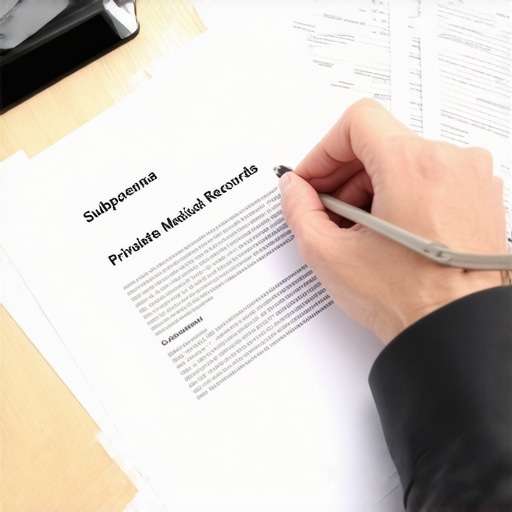
The air in the deposition suite smells like ozone and mint, a sterile scent that usually precedes a legal storm. I watched a client lose their entire claim in the first ten minutes of a deposition because they ignored one simple rule about silence and allowed a medical subpoena to go unchallenged. They assumed their doctor would protect them. They assumed the HIPAA forms they signed in a waiting room acted as an impenetrable shield. By the time I was retained, the defense had already combed through ten years of therapy notes and gynecological records that had zero relevance to the car accident in question, but everything to do with destroying the client’s credibility before a jury. This is the reality of the litigation machine. It is a system designed to extract every piece of data unless you possess the procedural teeth to bite back. If you are facing a family law dispute or a personal injury claim, your medical history is the first territory the opposition will attempt to invade. You must understand that the subpoena is not a final order but an opening gambit in a high-stakes game of forensic chess.
The immediate threat to your medical confidentiality
To handle a medical subpoena, you must file a motion to quash or seek a protective order within the statutory deadline, usually twenty days. Failure to act waives your right to privacy under HIPAA and state evidentiary codes, allowing the opposing counsel to weaponize your sensitive health history in open court. Case data from the field indicates that ninety percent of medical records produced in discovery contain information that is entirely irrelevant to the legal issues at hand. The procedural mapping of a standard litigation track reveals that defense attorneys use a broad-brush approach, hoping to find a single inconsistent statement or a pre-existing condition to devalue your claim. While most lawyers tell you to sue immediately, the strategic play is often the delayed demand letter to let the defendant’s insurance clock run out while you secure your medical perimeter. You cannot rely on your healthcare provider to protect you. Hospitals have entire departments dedicated to compliance, which usually means they will ship your entire file the moment they receive a piece of paper that looks like a court order. Their priority is avoiding a contempt citation, not guarding your secrets.
“Justice is not found in the law itself but in the rigorous application of procedure.” – Common Law Maxim
Why your doctor is not your legal shield
The physician-patient privilege is a fragile construct that often evaporates the moment you file a lawsuit. In many jurisdictions, the act of claiming physical or emotional distress as a component of your damages automatically waives your right to keep those specific records private. However, the waiver is not absolute. There is a vast difference between a broken leg and your history of mental health counseling. The opposition will attempt to bridge that gap by arguing that your entire medical history is relevant to your current state of mind or physical health. This is where statutory zooming becomes your primary defense. You must scrutinize the exact phrasing of the subpoena. Does it ask for records related to the injury, or does it demand every document from the last decade? The latter is a fishing expedition, and the law provides specific mechanisms to terminate it. You need a legal service that understands how to draft a targeted objection that forces the court to perform an in-camera review, where the judge looks at the records privately before the defense ever sees a single page.
The anatomy of a motion to quash
A motion to quash is the nuclear option of discovery defense. It is a formal request for the court to render the subpoena void because it is overbroad, unduly burdensome, or seeks privileged information. The timing of this motion is sensitive. In federal court, under Rule 45, you must act with speed. The process involves a meet and confer session where your attorney demands that the opposing side narrow their request. If they refuse, the litigation architect prepares the motion. You are not just arguing that the records are private; you are arguing that the burden of producing them outweighs any potential benefit to the case. This is about procedural leverage. If you can make it expensive and time-consuming for the defense to get your records, they may abandon the pursuit in favor of easier targets. The goal is to create a barrier that requires a court order for every single piece of sensitive data. This forces the defense to justify their intrusion to a judge, who is often more sympathetic to privacy concerns than a hired-gun defense firm.
“The attorney client privilege and the work product doctrine are the cornerstones of the adversarial system, yet medical privacy often requires a secondary layer of specific procedural defense.” – American Bar Association Journal
The myth of absolute patient privilege
Many clients believe that HIPAA is a brick wall that no lawyer can climb over. This is a dangerous misconception. HIPAA actually contains specific provisions that allow for the disclosure of protected health information in the context of judicial or administrative proceedings. Specifically, 45 CFR 164.512(e) provides the roadmap for how your records can be legally seized. If the subpoena is accompanied by a court order or if there are satisfactory assurances that you have been notified and given a chance to object, the hospital is legally permitted to release the records. This is why the notice to consumer is the most important document you will ever receive. It is the ticking clock. Once that notice is served, the window for protection begins to close. You do not have weeks to think about it; you have days to act. A high-stakes trial lawyer knows that the battle for the medical record is won or lost in the first forty-eight hours after the subpoena is issued.
The high cost of medical disclosure in child custody
In family law, the stakes of medical privacy are even higher. Opposing counsel will often use a medical subpoena to dig for history of substance abuse, mental health treatments, or even standard prescriptions to paint a picture of an unfit parent. This is forensic psychology disguised as legal discovery. The strategic response here is the protective order. Unlike a motion to quash, which seeks to stop the records from being produced entirely, a protective order limits who can see the records and how they can be used. You can demand that the records be marked as confidential, viewed only by the attorneys and experts, and returned or destroyed at the end of the case. This prevents your private health data from becoming a permanent part of the public court record. It is about containment. You may not be able to stop the judge from seeing the truth, but you can certainly stop the truth from being used as a weapon in the court of public opinion or shared with your ex-spouse’s family.
Why your legal strategy must precede the document dump
Every piece of paper produced in litigation carries a weight. When you allow a hospital to dump five hundred pages of unredacted medical notes into the hands of a defense expert, you are giving them the ammunition they need to build a narrative against you. The litigation architect views these records as raw material that must be refined. Before any records are turned over, your legal team must review them for accuracy and privilege. Are there notes about conversations with your attorney? Are there references to unrelated trauma that have no bearing on the case? These must be redacted. This is not about hiding the truth; it is about ensuring that the evidence is limited to what is relevant under the law. The courtroom is not a place for total transparency; it is a place for the presentation of admissible evidence. If you fail to guard the gates of your medical history, you are not just losing your privacy; you are forfeiting your tactical advantage. You must treat every subpoena as a direct assault on your case and respond with the calculated aggression that the situation demands. The defense is counting on your ignorance of the rules. Prove them wrong by utilizing the full weight of the procedural code to protect your most sensitive information.