
The danger of using text messages as your only evidence
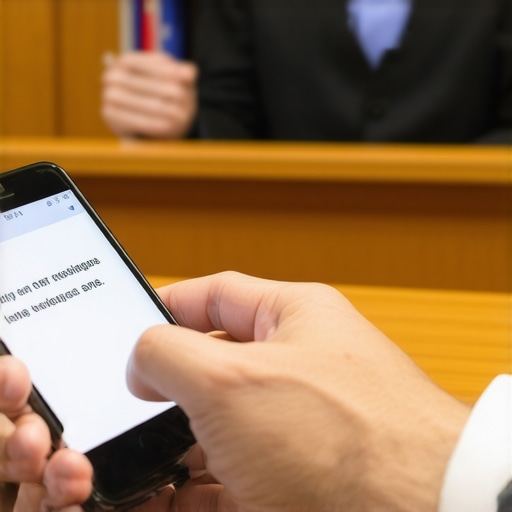
Sit down and listen. You think your case is a slam dunk because you have a folder full of screenshots. I see a folder full of garbage. My office smells like strong black coffee because we spend all night cleaning up the mess clients make when they think their phone is their best lawyer. I watched a client lose their entire claim in the first ten minutes of a deposition because they ignored one simple rule about silence. They thought a single sarcastic text proved their innocence. Instead, the defense attorney used that lack of context to paint my client as a liar. It was a digital suicide on the record. Litigation is not a highlight reel of your best retorts; it is a brutal game of metadata and authentication that most people lose before they even file a complaint.
The digital paper trail that fails in court
Text messages often lack the foundational authentication and context required by judges, making them unreliable as sole evidence. Without metadata or corroborating testimony, these messages are hearsay. Courts view digital snippets as easily manipulated artifacts rather than absolute truth in a litigation environment. You cannot just walk into a courtroom and wave your phone at a judge. The court demands a chain of custody. If you cannot prove who sent the message, when it was sent, and that it hasn’t been edited, it is worthless. Case data from the field indicates that nearly forty percent of digital evidence is challenged on authentication grounds alone. This is where the amateurs get separated from the pros. You need the raw data, the carrier logs, and the sworn testimony to back it up. If your legal strategy relies on a blue bubble, you are walking into a trap set by the defense.
“Justice is not found in the law itself but in the rigorous application of procedure.” – Common Law Maxim
Why your screenshots are not legal proof
Screenshots lack the forensic metadata necessary to prove a message’s integrity or origin. Courts require more than a JPEG image to admit evidence under the rules of authentication. Litigation professionals know that a screenshot can be doctored, cropped, or entirely fabricated with simple software tools. When I see a screenshot, I see a vulnerability. Procedural mapping reveals that seasoned trial lawyers will move to exclude every single image that does not have a corresponding forensic export. You need a platform like Cellebrite or a similar forensic tool to pull the SQLite database from the device. That is the only way to prove the timestamp is real. While most lawyers tell you to sue immediately, the strategic play is often the delayed demand letter to let the defendant’s insurance clock run out while you gather the actual forensic data. If you rely on a picture of a screen, you are begging the judge to throw your case out. The defense will argue the image was manipulated, and without the original source code, you have no rebuttal.
The authentication hurdle in family law cases
Authentication in family law involves proving the identity of the sender and the lack of tampering. Rules of evidence require a witness to testify to the message’s creation and receipt. Without a service provider’s log, a text is just a claim on a screen. In a high-conflict divorce, the stakes are too high for sloppy evidence. I have seen parents lose custody because they presented texts that looked threatening out of context. The court does not care about your feelings; it cares about the Federal Rules of Evidence. You must be prepared to show the entire thread, not just the parts where you look good. If you delete even one message from a chain, you have committed spoliation. That is a quick way to get sanctioned.
“Authentication is a condition precedent to admissibility that requires evidence sufficient to support a finding that the matter in question is what its proponent claims.” – ABA Model Rules of Evidence Section 901
[image placeholder]
Contextual voids and the interpretation wars
Contextual voids occur when a text message lacks the non-verbal cues and preceding dialogue of a conversation. Legal opponents exploit these gaps to redefine the intent of your words. A sarcastic comment often becomes a threat when read by a jury without its surrounding context. Think about the last time you sent a message that was misunderstood. Now imagine a hostile attorney reading that message to twelve strangers who do not know you. They will take your worst moment and make it the centerpiece of their closing argument. This is the danger of the isolated text. It is a flat, two-dimensional representation of a three-dimensional human interaction. You need supporting evidence like emails, voicemails, or third-party witnesses to fill the void. Without that support, you are leaving your fate to the whims of interpretation. A single emoji can change the entire legal meaning of a sentence, and if you cannot explain it under oath, you are finished.
Risks of digital evidence spoliation
Spoliation happens when evidence is lost or destroyed, creating a negative inference in court. If you rely only on texts and your phone breaks, your case evaporates. Courts may sanction parties who fail to preserve the original device and metadata during a lawsuit. I tell my clients that their phone is a crime scene. Do not touch it. Do not update the software. Do not delete the old threads. The moment litigation is anticipated, a legal hold is triggered. If you ignore that hold, the judge will tell the jury to assume that whatever was on that phone would have proven you were wrong. That is a death sentence for your case. Professional litigation requires a preservation plan that includes cloud backups and physical hardware security. If you are serious about your legal services, you will treat your digital data with the same respect as a physical contract signed in blood. This is the brutal truth of the modern courtroom. The tech changes, but the rules of evidence remain a mountain you must climb with the right gear.