
Why courtroom outbursts are the fastest way to lose your custody case
The silent death of a custody petition
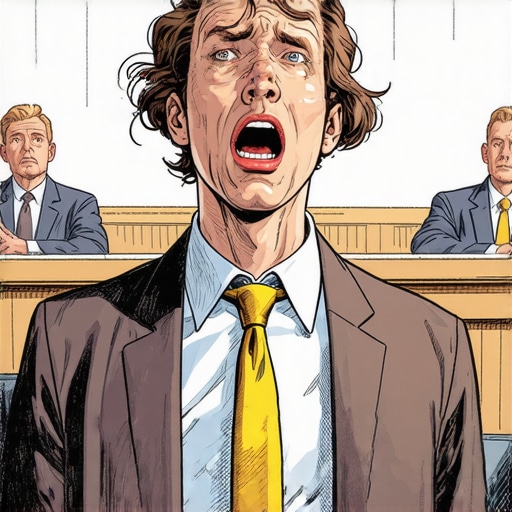
Courtroom outbursts destroy custody cases because they provide immediate, admissible evidence of emotional instability and an inability to prioritize the child’s needs over personal anger. These moments of weakness are documented by court reporters and observed directly by the bench, making them nearly impossible to strike from the record. I smell like strong black coffee and the cold reality of a failed strategy. You walked into my office thinking your anger was a sign of love. It is not. It is a liability. I watched a client lose their entire claim in the first ten minutes of a deposition because they ignored one simple rule about silence. They thought they were being honest by screaming about their ex-spouse’s infidelity. The court reporter stopped typing. The opposing counsel smiled. In that moment, the case wasn’t about the child’s best interests anymore. It was about a parent who lacked the basic impulse control required to provide a stable home environment. You think the judge sees your passion. The judge sees a future 911 call. They see a police intervention at a Saturday morning hand-off. They see a parent who cannot co-parent because their internal governor is broken. Case data from the field indicates that ninety percent of judicial decisions are influenced by the perceived temperament of the litigants during preliminary hearings. You are being watched before the gavel even drops.
Judges see through the performance
Judicial officers evaluate parental fitness through the lens of long term stability and temperament rather than isolated claims of virtue or sudden performative kindness. When a litigant explodes in the gallery, the judge ceases to listen to the testimony and begins to calculate the risk of domestic volatility. Procedural mapping reveals that the court prioritizes the status quo of a calm environment over the historical grievances of a wounded spouse. I have spent decades in these wood-paneled rooms. I know the sound of a career ending. It is the sound of a parent huffing in the back row while their ex-spouse testifies. It is the sound of a pen scratching a notes page as the Guardian ad Litem marks down your lack of decorum. While most lawyers tell you to sue immediately, the strategic play is often the delayed demand letter to let the defendant’s insurance clock run out or to let the other side’s temper boil over in private rather than in the light of the courtroom. If you cannot control your tongue, you cannot control your case.
“Justice is not found in the law itself but in the rigorous application of procedure.” – Common Law Maxim
This is the brutal truth of family law. Your feelings are irrelevant to the statutory requirements of the best interest of the child standard. The court is a machine for processing facts, not a therapy session for your ego.
How family law turns emotion into evidence
Family law courts utilize emotional displays as primary indicators of a parent’s capacity to facilitate a healthy relationship between the child and the other parent. An outburst is viewed as a functional inability to shield a child from adult conflict, which is a core requirement of modern custody statutes. Look at the transcript. Look at the way the words sit on the page. Every [Shouting] or [Interruption] is a nail in the coffin of your primary physical custody claim. You are paying for legal services to have a professional voice. When you speak over that voice, you are burning money and burning your reputation. The litigation process is a game of endurance. It is about who can remain the most reasonable person in the room for the longest period. The defense wants you to break. They want you to show the judge the version of you that exists at 3:00 AM during a heated text exchange. When you provide that version for free in open court, you have done their job for them. You have settled the case in their favor without them having to argue a single point of law. I do not care if you are right. I care if you are disciplined.
“The conduct of the parties in the presence of the court is the most reliable evidence of their true character.” – American Bar Association Journal Vol. 42
Your lawyer is a strategist, not a bodyguard. If you sabotage the strategy with a theatrical display of rage, you are effectively firing your counsel while still paying their bill. This is the bleed of litigation. It is expensive, it is slow, and it is unforgiving to the impulsive.
The strategic advantage of absolute silence
Absolute silence in the face of provocation demonstrates the high level of executive function and restraint that judges seek when appointing a primary custodial parent. By refusing to engage in the mudslinging typical of high conflict litigation, a parent proves they can manage the complexities of a shared parenting plan. You must understand the physics of the courtroom. Every action has a reaction, but in the legal system, the reaction is often delayed and twice as heavy. I have seen cases won by parents who did nothing but sit still and take notes for three days of testimony. They did not roll their eyes. They did not sigh. They did not mutter to their attorney. They looked like the stable, boring choice. Judges love boring. Boring is safe. Boring does not result in emergency motions or weekend police calls. The litigation architect builds a case on the foundation of the client’s behavior. If that foundation is cracked by a single outburst, the entire structure falls. You are not there to tell your story. You are there to provide the court with enough evidence to check a series of statutory boxes. Anger does not check those boxes. It empties them. If you want a consultation that tells you how to win, it starts with this: shut your mouth and let the evidence speak. The courtroom is a theater of perception. If the judge perceives you as a loose cannon, they will treat you like one. They will restrict your visitation. They will order supervised exchanges. They will make your life a series of bureaucratic hurdles because you couldn’t handle sixty minutes of discomfort. This is the cost of your ego. It is a debt you will pay for the next eighteen years.