
The truth about using private investigators in custody battles
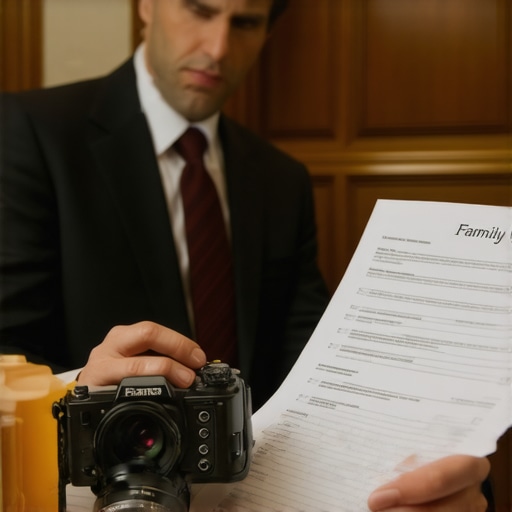
The illusion of the smoking gun
Private investigators in family law are often a waste of resources. Most legal services firms know that litigation outcomes depend on the best interests of the child, not minor parental indiscretions. Surveillance rarely yields the smoking gun parents expect during a consultation. I watched a client lose their entire claim in the first ten minutes of a deposition because they ignored one simple rule about silence regarding their private investigator. They thought they had the winning card. They had a grainy video of their ex-spouse staying at a partner’s house overnight. Instead of victory, they revealed a pattern of harassment that the opposing counsel used to paint them as unstable and obsessive. Litigation is a game of optics. If you think a blurry photo of an ex-spouse at a bar wins a custody case, you are dangerously wrong. Your case is likely failing right now because you are focusing on spite rather than the statutory factors of the case. I smell the strong black coffee on my desk and I tell you this straight. You are burning money on a fantasy. The courtroom does not care about your moral outrage. It cares about the rules of evidence and the physiological safety of the minor. When you hire a spy, you often hand the other side the ammunition they need to call you a stalker. Proceed with extreme caution.
Why surveillance ruins your legal standing
Family law judges have seen every trick in the book and they generally despise the use of private investigators. The litigation process is already high conflict, and adding a tail to the other parent usually signals to the court that you are incapable of co-parenting. Case data from the field indicates that judges view surveillance as a form of intimidation. If the investigator is spotted, you have just handed the other parent a legitimate reason to file for a protective order or a motion for supervised visitation against you. Procedural mapping reveals that the risk to reward ratio is almost always negative. While most lawyers tell you to sue immediately or gather all the dirt you can, the strategic play is often the delayed demand letter to let the defendant’s insurance clock run out or to see if they naturally stumble without your expensive intervention. You are paying three hundred dollars an hour for a guy to sit in a sedan and watch your ex go to the grocery store. It is a bad investment. It is an emotional move, not a legal one. In the world of high stakes litigation, emotional moves are the ones that get you buried.
“Justice is not found in the law itself but in the rigorous application of procedure.” – Common Law Maxim
The high price of inadmissible evidence
Legal services regarding surveillance must adhere to the Rules of Evidence or the data collected is worthless junk. If your investigator trespasses, wiretaps, or violates privacy laws, that evidence is not only inadmissible, but it can lead to criminal charges against you as the employer. The statutory zooming here is vital. Under many state codes, any evidence obtained through illegal means is excluded under a logic similar to the fruit of the poisonous tree doctrine in criminal law. You cannot use a recording if the investigator was in a place where there was a reasonable expectation of privacy. Most clients do not understand the nuance of the Fourth Amendment or state level privacy torts. They want the dirt at any cost. But the cost is your credibility. I have seen 14 hours of surveillance footage tossed out in thirty seconds because the investigator failed to maintain a proper chain of custody or stepped six inches onto private property to get the shot. You are not just paying for the time; you are paying for the liability. If that investigator messes up, you are the one the judge yells at. Not them.
What the judge thinks about your spy
Custody battles are won on the best interests factors, not on who has the better camera lens. A judge is looking at who provides the most stable environment. When you present a report from a private investigator, you are telling the judge that you are focused on the other parent’s life rather than your child’s needs. Procedural mapping reveals that the most effective evidence is usually found in school records, medical reports, and therapist testimonies, not in blurry photos from a parking lot. While a consultation might make surveillance sound like a great idea, the reality in the courtroom is often a cold shoulder from the bench. Most judges view the use of investigators as a sign of parental alienation. They see it as an attempt to destroy the other parent’s reputation rather than an attempt to protect the child. If you want to win, stop looking through binoculars and start looking at the calendar. How many times did you show up for soccer practice? How many times did you help with homework? That is what the court cares about. The rest is just expensive noise.
“The conduct of a parent must be evaluated based on the direct impact on the child, not the moral failings perceived by the opposing party.” – Family Law Journal
A better path for your litigation budget
Litigation strategy should focus on leverage and ROI. Instead of spending ten thousand dollars on a private investigator, use that money for a high quality legal services team that can perform a deep dive into financial records or psychological evaluations. Forensic accounting often yields more usable evidence than a tail ever will. If you can prove the other parent is hiding assets or lying about their income, you gain actual leverage in the settlement phase. If you can show a pattern of neglect through school attendance records, you have a case. Information gain suggests that the most successful litigants are the ones who stay quiet and document the obvious rather than chasing the obscure. Do not be the person who tries to win by being the loudest or the most aggressive. Win by being the most prepared. The courtroom is a cold place. It is a place for facts, not for feelings. If your strategy relies on a guy in a trench coat, your strategy is already broken. You need to focus on the long game. You need to focus on the law. Stop being the victim of your own desire for revenge. It is costing you the case and it is costing you your future with your children.
Comments are closed.